

Why Is My AC Not Cooling?
Bay Area Homeowner Guide
FAQ: Why Is My AC Not Cooling Even Though It Is Running?
If your air conditioner is running but the home still feels warm, common causes include thermostat issues, a dirty air filter, blocked airflow, low refrigerant, frozen coils, ductwork losses, or an aging system struggling during warmer Bay Area weather. Some issues are simple to fix, while others require professional diagnosis.
Below, we’ll cover common reasons your AC may not be cooling, simple checks you can make first, and when it may be time for professional service or replacement.
Introduction
When the first warm days arrive in the Bay Area, many homeowners turn on their air conditioner only to realize the home still feels warm or uncomfortable. This is especially common after months of lighter seasonal use and during the first inland heat spikes of spring.
Knowing what to check early can help restore comfort faster and prevent larger costly issues from developing.
Before assuming the system has failed, start with a few common issues homeowners often overlook.
Helpful Visual Troubleshooting Guide
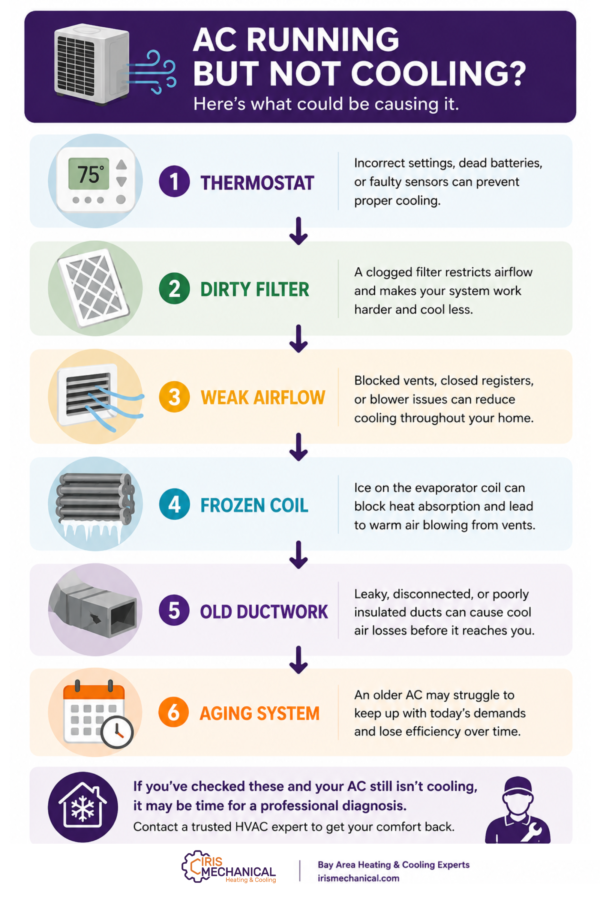
Check These 5 Common Culprits First
1. Check the Thermostat Settings
Sometimes the cooling equipment is not the real issue.
Incorrect schedules, weak batteries, sensors affected by direct sunlight, or older thermostats with inaccurate readings can all prevent proper cooling.
Make sure the thermostat is set to Cool and lower than the current room temperature.
If your thermostat uses batteries, replacing them may help.
A properly installed smart thermostat can also improve comfort, scheduling, and efficiency.
2. Replace a Dirty Air Filter
One of the most common reasons for weak cooling is restricted airflow caused by a clogged air filter. This often-overlooked issue can lead to:
⛔ Longer cooling cycles
⛔ Uneven room temperatures
⛔ Higher energy bills
⛔ Added strain on the system
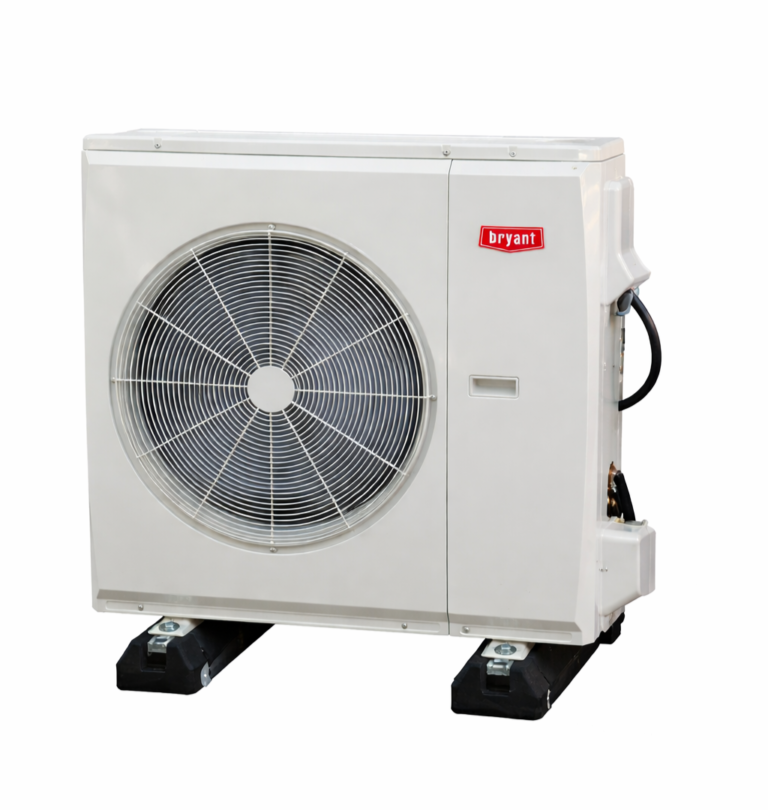
3. Confirm the Outdoor Unit Is Running
Your outdoor condenser unit plays a major role in removing heat from the home.
If it is silent, repeatedly clicking, or not operating normally, there may be an electrical or component issue that requires service.
Also make sure leaves, debris, or overgrown landscaping are not restricting airflow around the unit./
4. Check for Weak Airflow at Vents
If air is coming out weakly, the issue may involve:
⛔ Closed vents
⛔ Blocked returns
⛔ Dirty filters
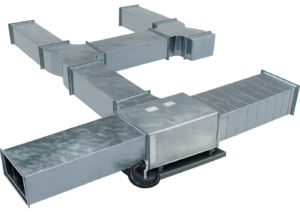
⛔ Aging ductwork
⛔ Blower issues
Walk through the home and check that supply vents are fully open and not blocked by furniture, rugs, curtains, or other household items.
5. Check the Breaker Panel
Sometimes a tripped breaker can stop part of the cooling system from operating properly. If the indoor unit runs but the outdoor condenser does not, an electrical interruption may be part of the issue.
If a breaker trips repeatedly, it is best to stop resetting it and schedule professional service.
Other Reasons Your AC May Not Be Cooling Properly
If the quick checks above do not solve the issue, the system may require professional attention. Let’s look at the top 3 common cooling problems that often involve deeper diagnosis or system evaluation.
1. Frozen Coil or Low Refrigerant
If your AC seems to be running but blowing warmer air, a frozen evaporator coil or refrigerant issue may be the hidden cause.
Common signs include:
⚠️ Warm air from vents
⚠️ Ice on refrigerant lines
⚠️ Weak airflow
⚠️ Long run times
⚠️ Higher indoor humidity
Low refrigerant often points to a leak that should be properly diagnosed and repaired.
2. Older Ductwork May Be Losing Cool Air
In many older Bay Area homes, the equipment itself may not be the only problem.
Many South Bay homes built decades ago may have aging duct systems, additions, or airflow layouts that no longer match today’s comfort needs.
Even high-quality equipment can struggle when conditioned air is lost before reaching the rooms that need it.
3. Bay Area Heat Spikes Often Expose Aging Systems
While coastal parts of the Bay Area stay milder, inland areas such as San Jose, Milpitas, Santa Clara, and Sunnyvale often experience warmer afternoons that quickly expose aging AC systems.
Many systems seem acceptable during mild weather, then struggle once the first sustained warm spell arrives. This is often when homeowners notice declining performance for the first time.
Repair or Replace an Older AC?
Sometimes a repair makes sense. Sometimes it only delays a larger decision and increases the risk of unexpected emergency costs.
Replacement may be worth considering when:
⚠️ Repairs are becoming more frequent
⚠️ Cooling remains uneven throughout the home
⚠️ Energy bills continue rising
⚠️ Noise levels are increasing
⚠️ The system struggles during warmer weather
⚠️ Certain rooms no longer stay comfortable
In the Bay Area, most heating and cooling systems last anywhere from 12–20 years depending on maintenance, usage patterns, and installation quality. After around 15 years, repair frequency and operating costs often begin increasing as normal wear affects major system components.
💡Tip: A common HVAC rule of thumb is the “$5,000 rule.” Multiply the age of your system by the estimated repair cost. If the number exceeds $5,000, replacement may be worth considering. Repairs approaching roughly 30% of the cost of a new system can also be a sign it may be time to explore replacement options more carefully.
One of the Most Common HVAC Replacement Mistakes
Many homeowners focus heavily on equipment brands, efficiency ratings, or upfront pricing during HVAC replacement, while overlooking something equally important: installation quality and contractor experience.
Poor installation quality can directly affect:
⚠️ Cooling performance
⚠️ Airflow balance
⚠️ Energy efficiency
⚠️ Humidity control
⚠️ System lifespan
⚠️ Warranty protection
⚠️ Long-term reliability
To help avoid installation issues and feel more confident in your HVAC replacement, we recommend looking for:
✔️ Licensed and insured HVAC contractors
✔️ Installers who stand behind their labor and workmanship
✔️ Trained and certified technicians with consistently strong customer reviews
✔️ Manufacturer-authorized installers with advanced factory training
Major HVAC manufacturers, including Mitsubishi Electric and Navien, often recommend choosing certified installation partners for advanced systems and high-efficiency equipment.
For example, Mitsubishi Electric highlights Diamond Contractors, while Navien recognizes certified HVAC partners who meet additional training and installation standards.
When to Call Iris Mechanical
If your AC is not cooling properly, the next step is a thorough system evaluation before spending money on the wrong repair or replacement.
Iris Mechanical holds multiple manufacturer-recognized certifications, including:
- Mitsubishi Electric Diamond Contractor
- Bryant Preferred Dealer
- Ecobee Pro
- Google Nest Pro
- Navien HVAC Pro

We focus on heating and cooling solutions designed around long-term comfort, airflow performance, energy efficiency, and the unique needs of Bay Area homes.
Our team helps homeowners determine whether the issue is maintenance-related, repairable, airflow-related, or a smart time to upgrade.
Need Help with an AC That Is Not Cooling?
Book an in-home visit or request a callback with Iris Mechanical for a clear, no-pressure evaluation.
🎉 Limited-Time Offer: New customers receive a complimentary diagnostic with an approved repair.
We help Bay Area homeowners with repairs, replacement, ductwork, and heat pump solutions designed around long-term comfort.