
Frequently Asked Questions
Find answers to commonly asked questions about HVAC installation, repair, replacement, and maintenance for Bay Area homeowners.
Choosing the Right System for Your Home
Do I really need central AC in the Bay Area’s mild climate?
Many homes across the Bay Area were originally built without central air, when summers were milder. Today, that’s changing.
Cities like San Jose, Sunnyvale, Mountain View, and Santa Clara now experience longer stretches of extreme heat, with 90°F+ days increasing by an estimated 20–50% in inland areas. Even typically mild communities can feel uncomfortable during heat waves.
Homeowners relying on window or portable units must also contend with wildfire smoke and declining air quality. In recent years, major fire seasons have brought weeks to months of smoke across California, including 2020 when every county experienced at least 46 days of smoke impacts. In the Bay Area, local geography can trap smoky air, allowing it to linger longer indoors and making reliable AC ventilation and filtration increasingly important.
If you’re considering updating your system to stay ahead of the Bay Area’s changing conditions while improving comfort and reducing energy costs, Iris Mechanical can help you explore what makes the most sense for your home.
What’s the right HVAC system for my home: heat pump, furnace and AC, or ductless?
No single HVAC option is the right fit for every home. The best choice depends on your home’s layout, existing system, comfort needs, and long-term goals. Here’s how the most common systems compare for Bay Area homeowners:
Ductless mini split systems
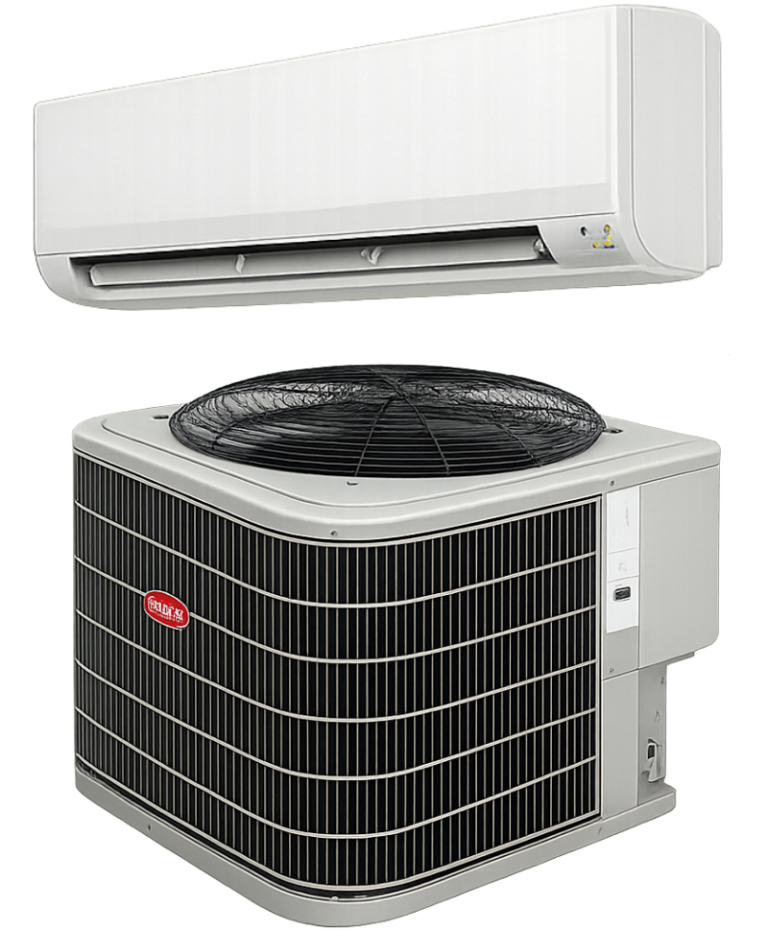
Great choice for homes without ducts, as well as additions, finished garages, ADUs, or rooms proven hard to stay comfortable with a central system. Each unit is controlled independently, allowing for temperature control in different areas of the home, and zoning can reduce energy use by up to 30% in some households by only conditioning occupied spaces.
Furnace with central AC
Good fit if your home already has natural gas service and existing ductwork in good shape. It provides strong heating and familiar operation, especially for homeowners who prefer a traditional setup and aren’t planning to electrify right away. Gas furnaces typically operate at 80–98% efficiency, depending on the model, and remain a reliable option for consistent heating.
The paired central air conditioner provides dedicated cooling during warmer months, delivering reliable whole-home cooling and fast temperature pull-down during Bay Area heat waves. This traditional two-system setup remains a practical option for many homes with existing gas infrastructure.
Central heat pump
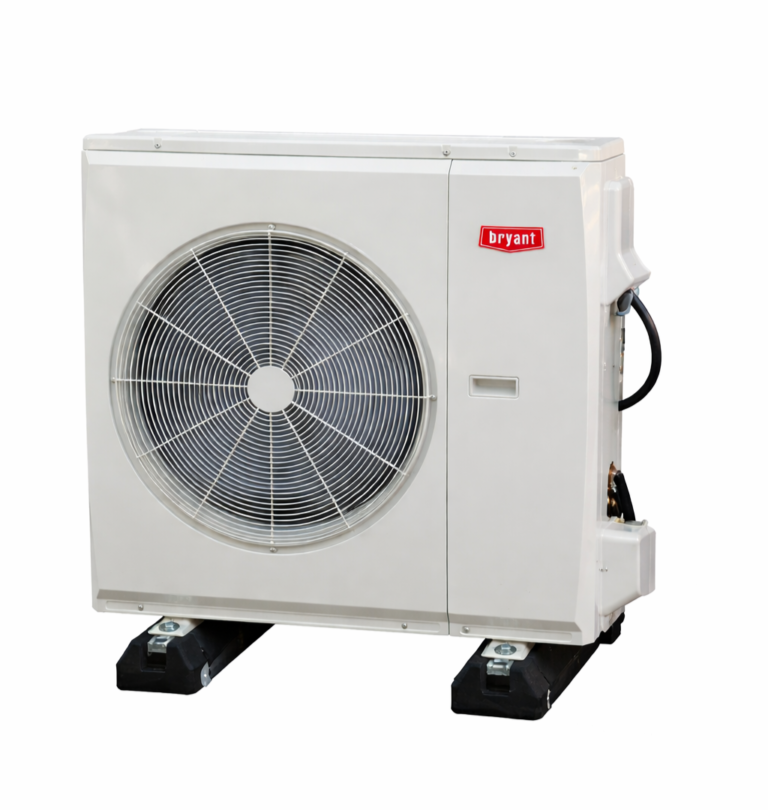
Ideal if you want both heating and cooling in one all-electric system. They perform especially well in the Bay Area’s mild winter climate and are a popular choice for homeowners looking to reduce gas usage, improve efficiency, and take advantage of available rebates or electrification incentives. Modern heat pumps can deliver 2–3 times more heating energy than the electricity they use, making them one of the most efficient options available.
At Iris Mechanical, our role is to help you understand how each option applies to your home so you can make a confident, well-informed decision. confidence.
Are heat pumps a good option for Bay Area homes?
For many Bay Area homes, heat pumps are a great option. They provide both heating and cooling in one all-electric system and perform especially well in the region’s mild climate. Modern heat pumps can deliver two to three times more heating energy than the electricity they use.
Homeowners often choose heat pumps for their efficiency, consistent comfort, and reduced reliance on gas, with many also qualifying for local, state, or utility rebates. Whether a heat pump is the right fit depends on your home’s layout, insulation, electrical capacity, and existing ductwork.
At Iris Mechanical, we evaluate how your home is built and used before recommending a system, and can help you understand any incentives often available for heat pump.
What size air conditioner system does my home actually need?
AC size isn’t something you can determine from square footage alone. The right size depends on how your home actually handles heat throughout the day. An oversized air conditioner can reduce efficiency by up to 20% due to short cycling and uneven cooling, and since heating and cooling account for roughly 40–50% of home energy use, proper sizing is especially important.
In the Bay Area, we look at things like how the sun hits your home, where heat builds up, how well insulated the home is, and how temperatures vary from room to room based on layout. Because of these differences, homes with the same square footage often need different system sizes.
That’s why we evaluate the home as a whole before recommending a system. Proper sizing helps your AC run quieter, cool more evenly, and avoid unnecessary wear during heat waves, especially in warmer inland areas.
What size furnace do I need for my home?
Furnace sizing is about more than square footage. It’s about how efficiently your home stays warm on cooler nights without temperature swings or noisy cycling. Heating typically accounts for roughly 25–35% of home energy use in climates like the Bay Area, making proper sizing especially important.
Bay Area homes experience very different heating needs depending on location, insulation, ceiling height, and airflow. A furnace that’s too powerful can turn on and off too quickly, creating uneven temperatures, and oversizing can reduce efficiency by roughly 10–20% due to frequent cycling. A system that’s undersized may struggle to keep up when temperatures drop.
We size furnaces based on how your home retains heat and how air moves through the space. The goal is comfortable heat that feels consistent from room to room and performs reliably over time.
Costs, Estimates & Incentives
How much does HVAC installation or replacement cost in the Bay Area?
Heating or cooling installation costs can vary by 20–40% because every Bay Area home is different, and installation practices and standards can differ between contractors.
Final pricing is shaped by factors such as:
• The system type that’s compatible with your home
• Desired efficiency level and available smart features
• Whether existing ductwork can be reused or needs attention
• Any electrical or panel upgrades required
• Installation conditions like rooftop placement, attic access, or crawlspaces
If you’re still in the early planning stage, our Online Estimator can provide a baseline estimate based on a few details about your home and what you’re considering.
For more accurate pricing, our team takes the time to understand your home during a complimentary in-person evaluation. This helps us recommend the right solution and provide real-world competitive pricing tailored to you.
Why are HVAC estimates so different between companies?
Heating and cooling estimates can vary significantly because proposals differ in equipment, system design, and installation quality, all of which directly impact performance, efficiency, and long-term cost.
Where they typically differ:
- Equipment quality (some systems are lower tier or less efficient)
- System sizing calculations (assumed vs. properly measured)
- Ductwork modifications (or lack of evaluation)
- Electrical upgrades included (or not included)
- Installation standards (work is done thoughtfully or corners are cut to reduce upfront cost)
Installation quality can account for approximately 30% of system performance and efficiency in standard systems, around 50% in modern heat pump installations, and up to 70% in higher-end variable speed systems like Mitsubishi.
Because of this, it’s important to look beyond price and understand whether a properly engineered system design, tailored to your home and compatible with the equipment, is included when comparing estimates.
At Iris Mechanical, we focus on trusted equipment, proper sizing, and careful installation designed for long-term comfort over quick swaps.
If you’re early in the process, our Online Estimator can provide a baseline range based on a few details about your home.
Are there rebates or tax credits for AC or heat pumps in the Bay Area?
Yes, many Bay Area homeowners may qualify for local or state incentives when upgrading to high-efficiency HVAC systems, especially all-electric heat pumps.
As of 2026, most incentives are offered through state programs and local energy providers, such as:
• PG&E
• Silicon Valley Clean Energy
• Silicon Valley Power
• San Jose Clean Energy
• Peninsula Clean Energy
Rebate amounts and eligibility typically vary based on each home, system design, and offerings by local utility providers, with many heat pump projects qualifying for several thousand dollars in incentives.
Because programs and requirements change over time, it’s important to review current options when planning a project.
More details on available programs, eligibility, and potential costs can be found in our Heat Pump Installation for Bay Area Homeowners Guide.
Installation & Replacement Planning
How do I know if I should repair or replace my heating or cooling system?
While an in-person evaluation is always best for accurate answers, a few common signs can often help indicate whether repair or replacement is likely.
In the Bay Area, most heating and cooling systems last anywhere from 12–20 years depending on maintenance, and service needs often become noticeably frequent or costly after around 15 years as normal wear takes a toll on system components.
Tip: A common rule of thumb in HVAC is the $5,000 rule. Multiply the age of your system by the repair cost. If the number exceeds $5,000, replacement may be worth considering. Repairs that approach about 30% of the cost of a new system may also indicate it’s time to explore replacement.
Comfort matters too. If your system struggles during heat waves or cold nights, runs loudly, or never quite keeps your home feeling consistent, the issue may be related to system design or sizing rather than individual parts.
At Iris Mechanical, we take the time to evaluate your system and help you understand whether repair or replacement makes the most sense for long-term comfort and cost savings.
How long does an AC installation and repair take?
Most standard installations and repair can be completed in one day. Larger or more complex systems may take a bit longer, but we’ll always give you a clear timeline upfront.
How long do heating and cooling systems typically last in the Bay Area?
In the Bay Area, most HVAC systems last between 12 and 20 years, depending on equipment type, installation quality, and maintenance. Many homeowners begin evaluating their system around the 15-year mark, even if it’s still running, to plan ahead and avoid more costly componetent repairs and unexpected breakdowns.
Typical lifespans we see:
- Gas furnaces: about 15–20 years
- Central air conditioners: generally 12-17 years
- Heat pumps: typically 15–20 years
- Ductless mini split systems: often 12–20 years
However, lifespan isn’t just about age. Factors that can shorten system life include lack of maintenance, dirty filters, poor duct design, oversized or undersized equipment that short cycles, and even environmental conditions like coastal salt air or wildfire smoke buildup.
Proper system sizing, thoughtful installation, and annual maintenance play a major role in long-term performance.
If your system is approaching 15 years or requires frequent repairs, it may be worth having our expert team evaluate whether continued repairs or replacement makes more long-term sense.
Do I need to replace my ductwork when replacing my HVAC system?
Not always. It depends on the condition and design of the existing ducts. If ductwork is properly sized, sealed, and in good condition, it may be reused.
Older duct systems can have airflow restrictions, leakage, or sizing issues that affect comfort and efficiency, especially when paired with newer equipment. Studies estimate that typical duct systems can lose 20–30% of airflow due to leaks, poor connections, or design issues, which makes evaluating duct condition an important part of system replacement.
That's why our team evaluates airflow, layout, and insulation to determine whether targeted improvements or full replacement will best support true comfort, efficiency, and reliable performance not just today, but for years to come.
Next Steps
How do I get started or schedule an evaluation?
Getting started is simple. Call us at (669) 348-3448 or request a callback here to schedule a complimentary evaluation.
On evaluation day, we'll assess your home, explain what we find, and walk you through your options so you can move forward with confidence.
If you decide to proceed, our certified technicians handle the work, cleanup, and final checks so your system performs as expected.
Satisfaction-1st is guaranteed.
Didn’t find the answer you were looking for?
Get clear, personalized guidance for your home directly from our team.
Whether you’re exploring options, need help with an existing issue, or just have other questions, our local team is here to help!